LED video walls operate as deterministic interactive nodes within smart building architectures, consolidating real-time telemetry, occupant context, and control planes for unified situational awareness LED video wall. They bridge BACnet/Modbus BMS data, MQTT publish/subscribe, and RTSP media feeds through middleware and protocol adapters. Edge rendering and inference reduce latency and cloud load while preserving local policy enforcement. Security relies on network segmentation, mutual TLS/HMAC, and short‑lived tokens. Integrations yield energy, safety, and maintenance gains — continued material explains implementation patterns and tradeoffs.
Why Integrate LED Video Walls Into Smart Building Architectures
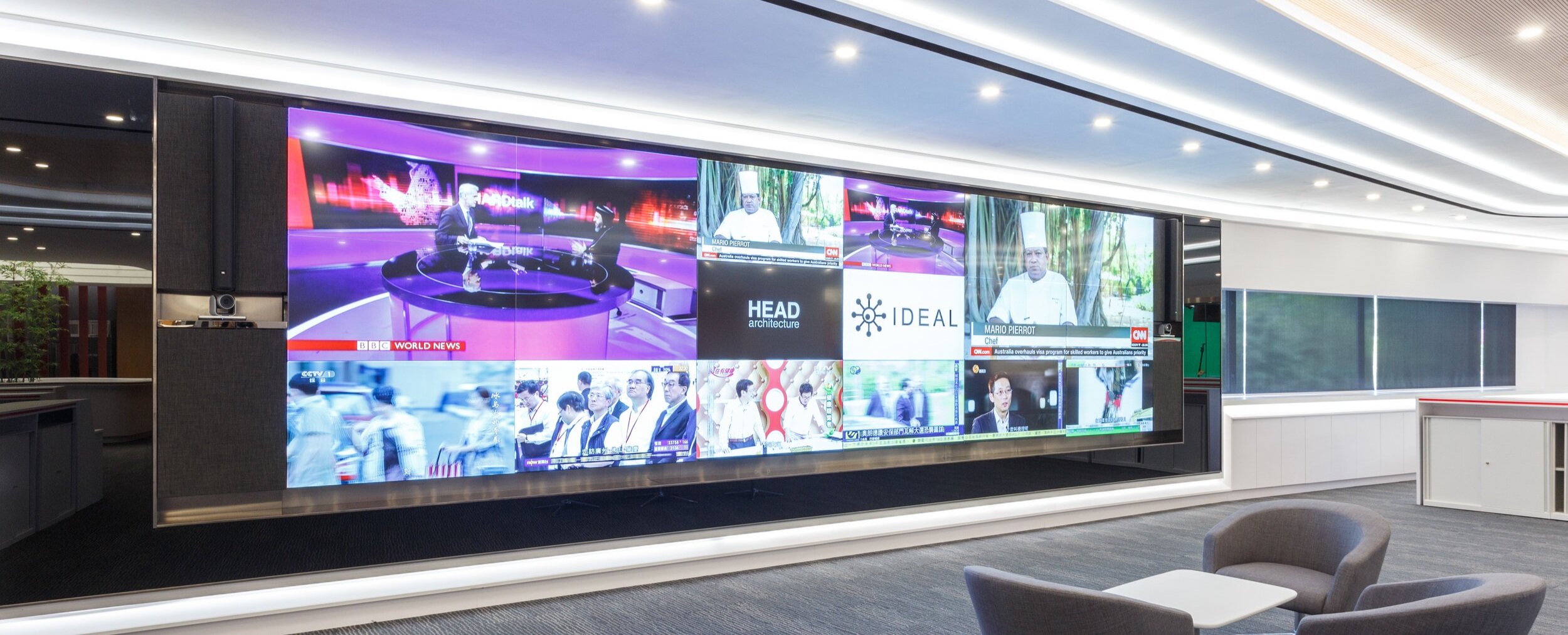
In smart building contexts, integrating LED video walls provides a unified visual interface that consolidates real-time operational data, occupant information, and environmental controls into a single, high-resolution display platform. The system-oriented rationale emphasizes occupant engagement through contextualized content delivery, wayfinding, alerts, and personalized environmental cues that increase autonomy and situational awareness. Integration supports centralized content orchestration, data-driven scheduling, and dynamic zoning to optimize energy use and user comfort. Architectural APIs enable modular deployments that preserve branding scalability across sites while maintaining consistent UX and control models digital LED sign board. Implementation prioritizes deterministic performance, secure data flows, and manageable maintenance pathways to assure the displays act as reliable nodes in a broader smart building ecosystem that empowers occupants and operators without constraining choice.
Key IoT Protocols and Standards for Reliable Connectivity
The system-level discussion focuses on protocol selection to make certain deterministic, low-latency control and telemetry for LED video walls. MQTT is recommended for lightweight publish/subscribe messaging between display controllers and cloud/edge services, enabling efficient state distribution and telemetry aggregation. BACnet and Modbus are presented as building automation integration layers for interoperability with HVAC, lighting, and BMS data to coordinate scheduling, access control, and power management.
MQTT for Lightweight Messaging
Against constrained networks and resource-limited devices, MQTT provides a lightweight publish/subscribe messaging model optimized for minimal overhead, predictable behavior, and reliable delivery options. The protocol enables lightweight telemetry and efficient state distribution across LED video wall controllers and building gateways. Topic hierarchies organize data flows, enabling granular subscriptions for content, health metrics, and control commands. Quality of Service levels and retained messages balance reliability against bandwidth.
- Minimal header and persistent sessions reduce reconnect costs.
- Topic hierarchies support scoped access control and flexible filtering.
- QoS 0/1/2 choices permit deterministic trade-offs between latency and delivery guarantees.
Deployments favor small footprint brokers, TLS for transport security, and OAuth or token-based authentication to preserve operator autonomy and secure distributed control.
BACNET & Modbus Integration
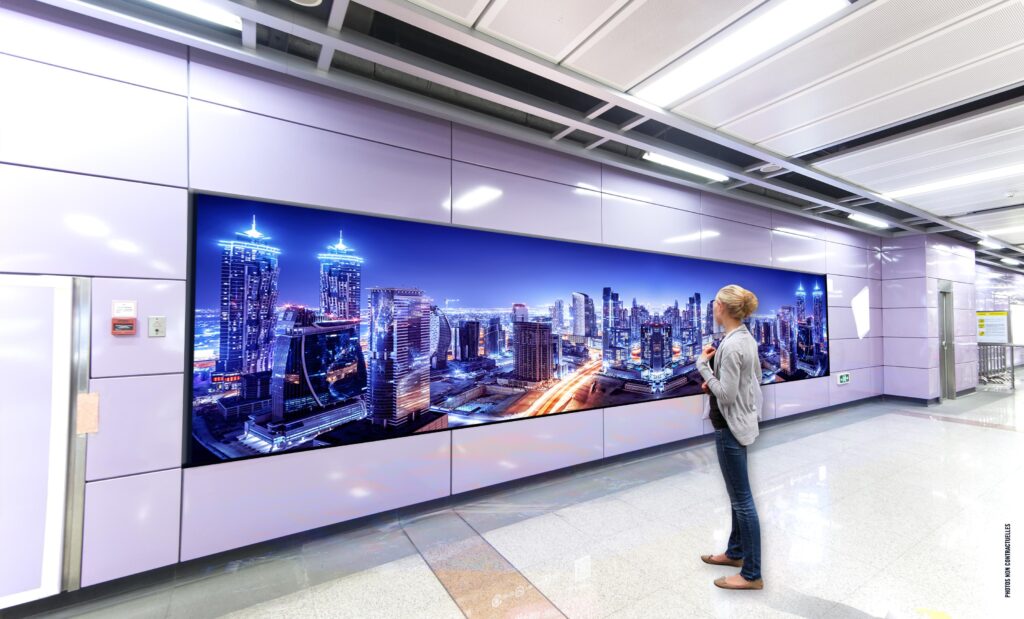
Following MQTT’s lightweight pub/sub capabilities, building automation commonly relies on field-level protocols like BACnet and Modbus to bridge LED video wall controllers with HVAC, lighting, and access systems for deterministic control and sensor exchange. BACnet offers object-oriented semantic models and BACnet/IP transport for native integration; Modbus provides a simple register-based model suitable for legacy I/O and deterministic polling. Systems engineers implement protocol mapping modules to translate object IDs, status flags, and command sets between video wall firmware and building management systems. Attention to firmware interoperability guarantees consistent data types, scaling, and timing across vendor devices. Security, error handling, and determinism are enforced at the gateway layer to preserve operator freedom while maintaining predictable control and auditability.
Real-Time Use Cases: Energy, Safety, and Occupant Experience
When integrated with building automation systems and sensor networks, LED video walls serve as real-time interfaces that aggregate, visualize, and actuate upon energy, safety, and occupant-experience data streams. They enable centralized dashboards that display live metrics and permit immediate control actions without compromising occupant autonomy. Examples focus on measurable outcomes and policy-driven interventions:
- Energy optimization: dynamic load displays, demand-response triggers, and HVAC setpoint adjustments informed by occupant analytics and utility signals.
- Safety operations: real-time alerts, sensor fusion for smoke/CO, and automated emergency routing overlays that guide egress and first-responder staging.
- Occupant experience: personalized environmental feedback, wayfinding, and space-utilization feeds that respect user privacy and offer opt-out choices.
Systems integrate policy rules, access control, and audit trails to guarantee secure, reversible interventions.
Edge Computing and Processing Strategies for Video Walls
Integrating LED video walls with building automation and sensor networks creates data flows and control demands that favor on-site processing to minimize latency, preserve bandwidth, and enforce local policy. Edge architectures colocate rendering engines and microservices at the video wall to enable low latency rendering and responsive control loops. Hardware acceleration (GPUs, FPGAs) and containerized media pipelines support deterministic frame delivery and dynamic content scaling. A hybrid topology segments responsibilities: real-time rendering and device management at the edge, analytics aggregation and historical processing upstream. Distributed inference processing across edge nodes accelerates computer vision and event detection while reducing cloud dependence. Orchestration, health monitoring, and failover policies guarantee continuous operation and allow operators maximal autonomy over performance, resource allocation, and upgrade cadence.
Security, Privacy, and Network Segmentation Considerations
A robust security and privacy posture for LED video wall systems requires strict network segmentation, least-privilege access controls, and end-to-end data protection to prevent lateral movement and unauthorized access to both control planes and media streams. The architecture isolates control, management, and content networks; enforces role-based access; and logs tamper indicators including physical tamper events. Encryption, mutual authentication, and tokenized credentials protect streams and management APIs. Attention to data residency and regulatory boundaries dictates where logs and content can be stored and transmitted. Defensive monitoring and automated containment reduce blast radius.
- VLANs and microsegmentation between IoT sensors, video processors, and building systems
- Hardware-backed keys, transport encryption, and authenticated boot for devices
- Geo-fenced storage policies, audit trails, and physical tamper detection mechanisms
Integration Workflows: APIs, Middleware, and Control Systems
Integration workflows require robust API authentication strategies to guarantee authorized access and secure token lifecycle management between video walls and building systems. Middleware performs protocol and data translation, normalizing telemetry, command formats, and media metadata for downstream consumers. Unified control protocols consolidate device state, scheduling, and priority arbitration to enable deterministic orchestration across AV, BMS, and IoT platforms.
API Authentication Strategies
Define robust API authentication strategies to secure communications between LED video wall controllers, IoT platforms, and building management systems. The section outlines token rotation and certificate pinning as core mechanisms; OAuth2 with short-lived access tokens, mutual TLS for controller endpoints, and HMAC for legacy devices are evaluated. Emphasis is on minimizing attack surface while preserving operator autonomy and system interoperability.
- Enforce short-lived JWTs with automated token rotation and centralized revocation.
- Implement certificate pinning plus mutual TLS for controller-to-platform links; rotate certificates per policy.
- Apply HMAC-based signatures for constrained devices, with secure key provisioning and periodic key rollover.
Designs separate authentication from authorization, log authentication events for audit, and allow configurable policy choices to preserve deployment freedom.
Middleware Data Translation
Within middleware layers, data translation functions as the deterministic bridge that maps heterogeneous APIs, protocols, and control models between LED video wall controllers, IoT platforms, and building management systems. The middleware executes protocol bridging, translating message formats, addressing schemes, and transport semantics to preserve intent and timing. Schema mapping aligns disparate payloads, normalizes event vocabularies, and enforces types for downstream consumers. Deterministic transformations, idempotent retries, and transactional boundaries prevent state divergence across systems. Routing rules and filter chains enable selective propagation of telemetry, commands, and configuration. Security contexts and token exchanges are maintained without altering functional payloads. Logging, observability hooks, and performance metrics validate translation fidelity. The design prioritizes modular adapters and policy-driven mappings to enable operator autonomy and controlled extensibility.
Unified Control Protocols
Multiple convergent control pathways unify LED video wall operation with building systems by standardizing APIs, middleware behaviors, and control-plane responsibilities into a coherent workflow. The architecture emphasizes protocol convergence and device orchestration to reduce heterogeneity, enabling independent teams to compose, extend, or replace modules without lock-in. Clear API contracts, message schemas, and middleware adapters enforce predictable state shifts and timing for display updates, power management, and sensor-driven triggers. Control systems expose role-based interfaces for freedom in deployment topology while preserving central policy enforcement.
- Unified REST/gRPC endpoints for configuration and telemetry
- Middleware adapters translating BACnet/Modbus/RTSP to normalized events
- Orchestration engine managing priorities, failover, and system-wide policies
This approach yields deterministic, scalable integration.
Operational Benefits: Maintenance, Analytics, and Cost Savings
Several measurable operational advantages accrue when LED video walls are integrated with IoT-enabled building systems: proactive maintenance reduces downtime, analytics drives optimized content and energy use, and centralized management lowers labor and lifecycle costs. The system enables predictive maintenance and usage forecasting via sensor telemetry, fault logging, and trend analysis, reducing unplanned failures and spare-part inventory. Energy management pairs luminance control with HVAC and lighting zones to cut consumption during low-demand periods. Centralized orchestration simplifies firmware updates, security patches, and SLA adherence, minimizing administrative overhead. Analytics dashboards provide actionable KPIs—uptime, energy per pixel-hour, content engagement—supporting autonomous scheduling and vendor-agnostic procurement decisions. Overall, integration yields quantifiable reductions in OPEX and extended asset life while preserving operational freedom and control.
Frequently Asked Questions
How Do LED Video Walls Affect Building Insurance Premiums?
They marginally raise insurance impact by adding asset value and risk vectors; premium influence depends on installed safety, redundancy, IoT monitoring, and documented maintenance. Underwriters adjust rates per quantified exposure, mitigation, and loss-history.
What Are Typical Warranty Terms for Integrated LED Video Walls?
Typical warranty terms: manufacturer warranty often covers 1–3 years for components and labor, with options for extended protection up to 5–10 years. Coverage details specify pixel failure, power supplies, and service response SLAs.
Can LED Video Walls Be Reused After Space Renovations?
Yes. They can be reused: modular relocation enables physical disassembly and reinstall; content repurposing updates media for new layouts. Technical planning, standardized mounts, and adaptive control systems assure minimal downtime and preserved operational freedom.
How Do Ambient Light Conditions Impact Long-Term LED Performance?
Ambient light conditions accelerate lumen depreciation and color shift; high ambient temperature and UV-rich spectral distribution exacerbate thermal stress and photochemical degradation. Systems should monitor irradiance, temperature, and spectrum to optimize cooling, dimming, and maintenance schedules.
What Certifications Are Required for Commercial Video Wall Installations?
Required certifications include UL Listed for electrical safety and CE Marking for EU conformity; additional approvals may include RoHS, FCC, local building and fire codes, and manufacturer-specific certifications for mounting and EMC compliance.
Conclusion
Integrating LED video walls with IoT and smart building systems yields measurable operational, safety, and experiential benefits when implemented with standards-based protocols, edge processing, and robust security. Systems-oriented deployments prioritize protocol interoperability, API-driven control, and network segmentation to enable real-time analytics, predictive maintenance, and coordinated emergency responses. With middleware and edge compute reducing latency and bandwidth, facility managers achieve lower lifecycle costs and improved uptime while preserving data privacy and resilience across converged building and AV infrastructures.
… Read More